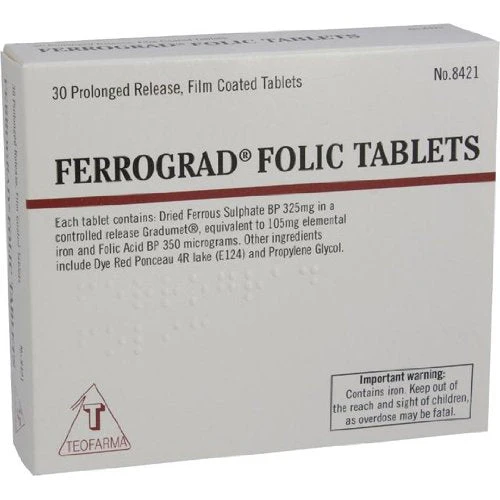
Ferrograd C Tablets - 30
Ferrograd C Tablets for Iron Deficiency Support
You can use ferrograd c tablets to help address iron deficiency when your doctor has identified low iron levels through blood tests. Each tablet contains ferrous sulphate, a well-absorbed form of iron, combined with vitamin C to enhance iron absorption in your digestive system.
These tablets provide a controlled-release formulation that delivers iron gradually throughout your digestive tract. This approach helps reduce common side effects associated with iron supplementation, such as stomach upset and nausea, whilst ensuring your body receives a steady supply of this essential mineral.
How Iron and Vitamin C Work Together
The ferrous sulphate in these tablets provides elemental iron that your body uses to produce haemoglobin, the protein in red blood cells that carries oxygen around your body. When your iron stores are low, your body cannot produce enough healthy red blood cells, leading to iron deficiency anaemia.
Vitamin C (ascorbic acid) enhances iron absorption by converting iron into a form that your intestines can absorb more easily. This combination helps maximise the amount of iron your body can utilise from each tablet, making the supplement more effective than iron alone.
Who Should Consider Iron Supplementation
Your doctor may recommend iron tablets if blood tests show you have iron deficiency or iron deficiency anaemia. Certain groups have higher iron requirements or increased risk of deficiency, including women with heavy menstrual periods, pregnant women, and people following vegetarian or vegan diets.
Iron deficiency symptoms you might experience include:
- Persistent tiredness and fatigue
- Pale skin, nails, or inner eyelids
- Shortness of breath during normal activities
- Cold hands and feet
If you're exploring vitamins and supplements to support your health, always consult your healthcare provider before starting iron supplementation, as too much iron can be harmful.
Controlled-Release Technology Benefits
The controlled-release formulation in these tablets helps reduce gastrointestinal side effects commonly associated with iron supplements. Traditional iron tablets can cause stomach irritation, constipation, or nausea because they release all their iron content quickly in your stomach.
This gradual-release system allows the iron to be released slowly as the tablet moves through your digestive system, reducing the concentration of iron in any one area and minimising irritation to your stomach lining.
Storage and Clinical Considerations
Store these tablets in a cool, dry place away from direct sunlight and keep them out of reach of children, as iron poisoning can be serious in young children. Take the tablets on an empty stomach if possible, as food can reduce iron absorption, though you may take them with food if they cause stomach upset.
Your doctor will typically monitor your iron levels through blood tests whilst you're taking iron supplements to ensure they're working effectively and to determine how long you need to continue treatment. Most people need to take iron supplements for several months to replenish their iron stores fully.
This product is a medicine. Speak to your doctor or pharmacist before using if you have an underlying medical condition or are taking other medicines.
Description
Ferrograd C Tablets for Iron Deficiency Support
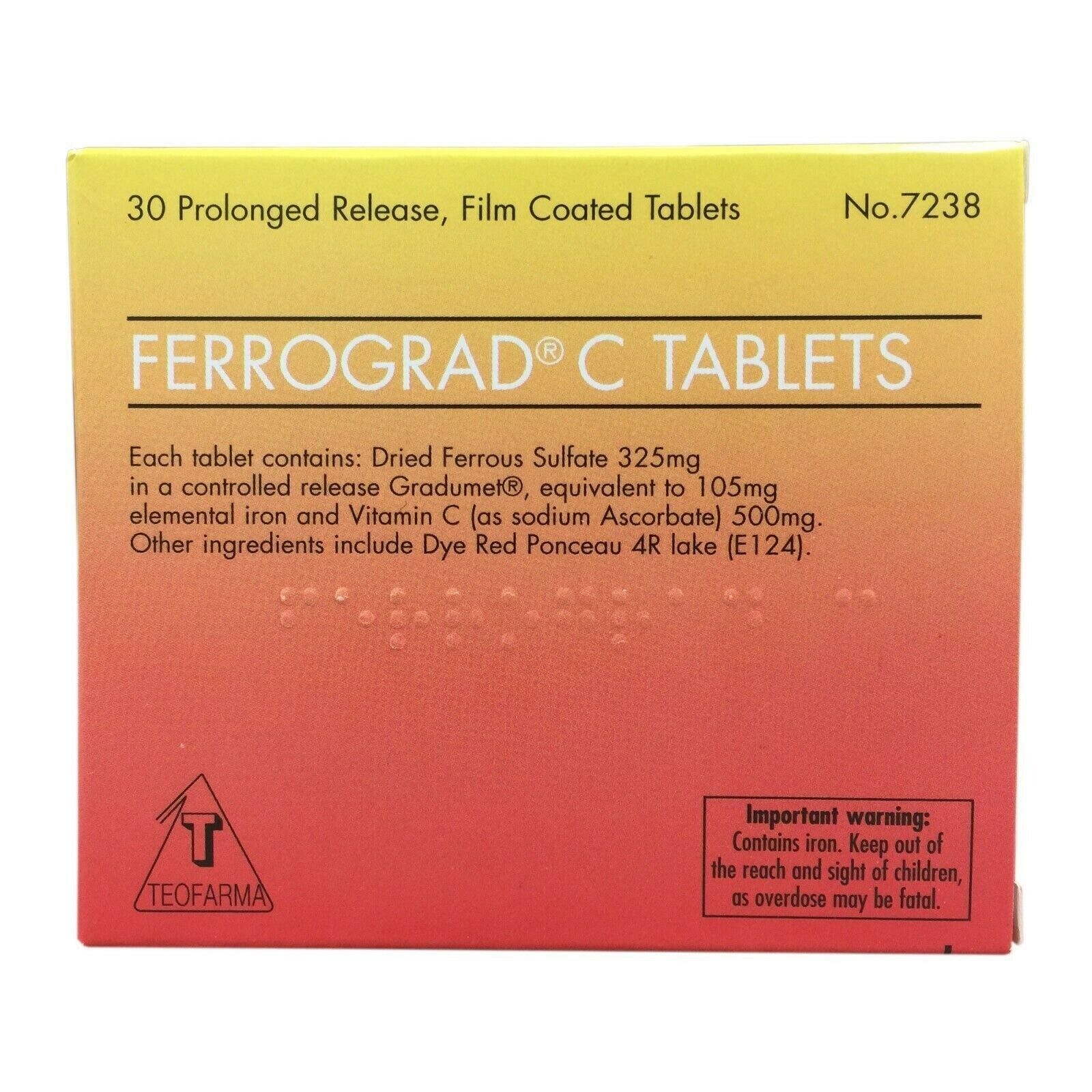
You can use ferrograd c tablets to help address iron deficiency when your doctor has identified low iron levels through blood tests. Each tablet contains ferrous sulphate, a well-absorbed form of iron, combined with vitamin C to enhance iron absorption in your digestive system.
These tablets provide a controlled-release formulation that delivers iron gradually throughout your digestive tract. This approach helps reduce common side effects associated with iron supplementation, such as stomach upset and nausea, whilst ensuring your body receives a steady supply of this essential mineral.
How Iron and Vitamin C Work Together
The ferrous sulphate in these tablets provides elemental iron that your body uses to produce haemoglobin, the protein in red blood cells that carries oxygen around your body. When your iron stores are low, your body cannot produce enough healthy red blood cells, leading to iron deficiency anaemia.
Vitamin C (ascorbic acid) enhances iron absorption by converting iron into a form that your intestines can absorb more easily. This combination helps maximise the amount of iron your body can utilise from each tablet, making the supplement more effective than iron alone.
Who Should Consider Iron Supplementation
Your doctor may recommend iron tablets if blood tests show you have iron deficiency or iron deficiency anaemia. Certain groups have higher iron requirements or increased risk of deficiency, including women with heavy menstrual periods, pregnant women, and people following vegetarian or vegan diets.
Iron deficiency symptoms you might experience include:
- Persistent tiredness and fatigue
- Pale skin, nails, or inner eyelids
- Shortness of breath during normal activities
- Cold hands and feet
If you're exploring vitamins and supplements to support your health, always consult your healthcare provider before starting iron supplementation, as too much iron can be harmful.
Controlled-Release Technology Benefits
The controlled-release formulation in these tablets helps reduce gastrointestinal side effects commonly associated with iron supplements. Traditional iron tablets can cause stomach irritation, constipation, or nausea because they release all their iron content quickly in your stomach.
This gradual-release system allows the iron to be released slowly as the tablet moves through your digestive system, reducing the concentration of iron in any one area and minimising irritation to your stomach lining.
Storage and Clinical Considerations
Store these tablets in a cool, dry place away from direct sunlight and keep them out of reach of children, as iron poisoning can be serious in young children. Take the tablets on an empty stomach if possible, as food can reduce iron absorption, though you may take them with food if they cause stomach upset.
Your doctor will typically monitor your iron levels through blood tests whilst you're taking iron supplements to ensure they're working effectively and to determine how long you need to continue treatment. Most people need to take iron supplements for several months to replenish their iron stores fully.
This product is a medicine. Speak to your doctor or pharmacist before using if you have an underlying medical condition or are taking other medicines.