Phenergan 25mg Tablets x56
What Are Phenergan 25mg Tablets?
Phenergan 25mg tablets contain promethazine hydrochloride, a first-generation antihistamine with a long history of use in the UK. They are available over the counter and are used to manage a range of conditions — from seasonal allergies and hay fever to short-term sleep disturbance and nausea.[1] If you've been struggling with itchy eyes, a runny nose, or difficulty nodding off, this could be a treatment worth considering. You can browse our full range of allergy and hay fever treatments to find the right option for you.
Each pack contains 56 tablets, making it a practical choice for ongoing symptom management. Promethazine has been used clinically for decades and is listed in the British National Formulary as an antihistamine with sedative properties.[2] It works on multiple receptor types, which explains why it's effective across several different conditions rather than just one.
How Does Phenergan Work in the Body?
Promethazine works by blocking histamine H1 receptors, which are responsible for triggering the classic symptoms of an allergic reaction — sneezing, itching, watery eyes, and skin rashes.[1] But it doesn't stop there. Unlike newer antihistamines, promethazine also crosses the blood-brain barrier, which is why it produces a noticeable sedative effect.[3]
Here's a quick breakdown of how it acts:
- Blocks H1 histamine receptors — reduces allergy symptoms like itching, sneezing, and hives
- Acts on the central nervous system — produces sedation, useful for short-term sleep problems
- Blocks muscarinic receptors — contributes to anti-nausea effects, helpful for travel sickness
- Onset of action — typically within 20–30 minutes of taking a tablet[1]
Who Is Phenergan Suitable For?
Phenergan 25mg tablets are suitable for adults and children aged 5 and over, though dosing differs by age group.[1] They're particularly useful for people who need relief from allergy symptoms alongside a degree of sedation — for example, those whose allergies disrupt their sleep. That said, they're not the right choice for everyone.
Phenergan may be appropriate if you:
- Experience hay fever, hives, or allergic skin reactions
- Suffer from short-term sleep disturbance (adults only for this indication)
- Need relief from nausea or travel sickness
- Are an adult or a child aged 5 years or older
It is not suitable for children under 5, people with certain liver conditions, or those taking monoamine oxidase inhibitors (MAOIs).[4]
How Does Phenergan Compare to Other Antihistamines?
| Feature | Phenergan 25mg (Promethazine) | Cetirizine 10mg (e.g. Zirtek) |
|---|---|---|
| Generation | First-generation | Second-generation |
| Causes drowsiness? | Yes — significant sedation | Minimal in most people |
| Used for sleep? | Yes (short-term) | No |
| Suitable for children under 5? | No | No (under 2 years) |
| Suitable for travel sickness? | Yes | No |
Is Phenergan Safe to Store at Home?
Phenergan 25mg tablets should be stored below 25°C in a dry place, away from direct sunlight. Keep them out of reach of children at all times — the pack contains 56 tablets, which is a significant quantity.[1] Do not use the tablets after the expiry date printed on the packaging.
If you're also looking for help with sleep beyond antihistamines, our sleep aid collection includes a range of options to suit different needs. Always check with a pharmacist if you're unsure whether Phenergan is appropriate alongside any other medicines you take.[5]
This product is a medicine. Speak to your doctor or pharmacist before using if you have an underlying medical condition or are taking other medicines.
What Is Phenergan and What Is It Used For?
Phenergan 25mg tablets contain promethazine hydrochloride, a sedating antihistamine licensed for use in the UK. It is used to treat allergic conditions including hay fever, urticaria (hives), and itchy skin rashes.[1] In adults, it is also used for the short-term management of sleep disturbance. Additionally, it can help relieve nausea and vomiting, including travel sickness.[1] It is available without a prescription from registered UK pharmacies.
What Do You Need to Know Before Using Phenergan?
Before taking Phenergan, it's important to be aware of certain conditions and medicines that may make it unsuitable for you. Do not take Phenergan if any of the following apply:
- You are under 5 years of age[1]
- You are allergic to promethazine or any other ingredient in the tablet
- You have a condition called porphyria (a rare blood disorder)
- You are taking monoamine oxidase inhibitors (MAOIs) or have taken them in the last 14 days[4]
- You have severe liver disease
- You are in the last two weeks of pregnancy
Speak to your doctor or pharmacist before taking Phenergan if you have epilepsy, glaucoma, an enlarged prostate, or any heart condition.[1]
The following medicines may interact with Phenergan:
- Alcohol and other CNS depressants (e.g. sleeping tablets, sedatives)
- Anticholinergic medicines (e.g. some bladder or stomach medicines)
- Antidepressants, including tricyclics and MAOIs[4]
- Antipsychotic medicines
- Some medicines for epilepsy
How Should You Use Phenergan?
Always take Phenergan exactly as directed on the label or as advised by your pharmacist. The tablets should be swallowed whole with water. Here are the general steps to follow:[1]
- Check the correct dose for your age and condition using the table below
- Take the tablet with a full glass of water
- For sleep, take the dose 20–30 minutes before bedtime
- For travel sickness, take the dose the night before travel and again on the morning of travel
- Do not exceed the stated dose
- Do not use for more than 7–10 consecutive nights without medical advice
| Indication | Adults | Children 5–10 years | Children 10+ years |
|---|---|---|---|
| Allergy / Hay Fever | 25mg at night (or 10mg twice daily) | 5–10mg (seek advice) | 10–25mg at night |
| Sleep disturbance | 25mg at bedtime | Not recommended | Not recommended |
| Travel sickness | 25mg the night before | 5–10mg (seek advice) | 10–25mg the night before |
| Nausea / Vomiting | 25mg at night | Seek medical advice | Seek medical advice |
If you're travelling and need additional support for nausea or motion sickness, our sickness and nausea collection has further options to consider alongside your pharmacist's advice.
What Are the Possible Side Effects of Phenergan?
Like all medicines, Phenergan can cause side effects, although not everyone experiences them.[1] If you experience a serious allergic reaction (difficulty breathing, swelling of the face or throat), stop taking the tablets and seek emergency medical help immediately.
Common side effects:
- Drowsiness and sedation — particularly the morning after taking a dose[1]
- Dry mouth
- Blurred vision
- Dizziness
- Difficulty passing urine
Less common side effects:
- Confusion or disorientation, particularly in older adults[3]
- Skin sensitivity to sunlight (photosensitivity)
- Headache
- Restlessness or agitation (more common in children)
- Low blood pressure (hypotension)
How Should You Store Phenergan?
Correct storage helps maintain the effectiveness of your tablets. Follow these guidelines:[1]
- Store below 25°C in a cool, dry place
- Keep away from direct sunlight and moisture
- Keep out of the sight and reach of children
- Do not use after the expiry date printed on the pack
- Do not dispose of medicines via wastewater or household waste — return unused tablets to your pharmacy
For other allergy-related products and treatments, you can explore our allergy and hay fever range for further support.
References
- https://www.nhs.uk/medicines/promethazine/
- https://www.nhs.uk/conditions/antihistamines/
- https://www.nhs.uk/conditions/insomnia/treatment/
- https://www.nhs.uk/conditions/hay-fever/treatment/
- https://bnf.nice.org.uk/drugs/promethazine-hydrochloride/
Written and reviewed by our qualified team
Your safety and success are our highest priorities. Our medical team rigorously evaluates every product and piece of advice we provide, ensuring you receive only the most effective, science-backed solutions available.
Frequently Asked Questions
What are Phenergan 25mg tablets used for?
Phenergan 25mg tablets are used to relieve allergy symptoms such as hay fever, hives, and itchy skin. They are also used for short-term sleep disturbance in adults, and to help manage nausea and vomiting including travel sickness. Because promethazine has sedating properties, it works across all these conditions through slightly different mechanisms in the body. If you're unsure whether Phenergan is right for your symptoms, speak to a pharmacist before purchasing.
How long does Phenergan take to work?
Phenergan typically begins to take effect within 20 to 30 minutes of swallowing a tablet. The sedative effects can last for up to 12 hours, which is why it's usually taken at night when used for sleep disturbance. For allergy symptoms, you may notice relief within an hour of taking your dose. Bear in mind that residual drowsiness the following morning is possible, so plan accordingly if you need to drive or concentrate at work.
Can I take Phenergan every night for sleep?
Phenergan is only recommended for short-term use as a sleep aid — generally no longer than 7 to 10 consecutive nights. Using it regularly beyond this period is not advised without speaking to a doctor, as tolerance can develop and the underlying cause of your sleep problems may need addressing. If you're looking for additional support, our sleep aid collection includes a range of options to discuss with your pharmacist. Persistent insomnia should always be reviewed by a GP.
Is Phenergan safe for children?
Phenergan 25mg tablets are not suitable for children under 5 years of age under any circumstances. For children aged 5 to 10, a lower dose is appropriate but should only be given under the guidance of a healthcare professional. Children aged 10 and over can generally take the same dose as adults for allergy symptoms, but you should always read the patient information leaflet carefully. If you have any doubts, speak to your pharmacist or GP before giving Phenergan to a child.
Can I drink alcohol while taking Phenergan?
No — you should avoid alcohol entirely while taking Phenergan. Alcohol significantly increases the sedative effects of promethazine, which can lead to dangerous levels of drowsiness. This combination can impair your ability to drive, operate machinery, or react quickly in an emergency. Even small amounts of alcohol can intensify the effects, so it's safest to abstain completely during your course of treatment.
Does Phenergan cause drowsiness the next morning?
Yes, this is one of the most commonly reported effects of Phenergan. Because the sedative action can last up to 12 hours, some people feel groggy or slow the morning after taking a tablet. This is particularly relevant if you take a dose late at night or take a higher dose than recommended. You should not drive or operate heavy machinery until you are sure the drowsiness has fully worn off. If morning drowsiness is a problem for you, a non-sedating antihistamine may be a better choice for daytime allergy relief.
What is the difference between Phenergan and non-drowsy antihistamines?
Phenergan contains promethazine, a first-generation antihistamine that crosses the blood-brain barrier and causes noticeable sedation. Non-drowsy antihistamines such as cetirizine or loratadine are second-generation medicines that are far less likely to cause sleepiness. Phenergan is better suited for situations where sedation is acceptable — such as night-time allergy relief or short-term sleep problems — whereas non-drowsy options are preferable for daytime use. You can explore a wider range of options in our allergy and hay fever collection.
Can I take Phenergan if I am pregnant or breastfeeding?
You should speak to your doctor or midwife before taking Phenergan if you are pregnant or breastfeeding. Promethazine is generally avoided in the last two weeks of pregnancy due to potential effects on the newborn. Small amounts of promethazine may pass into breast milk, so breastfeeding is not recommended while taking this medicine. Your healthcare provider can advise on the safest alternative for managing allergy symptoms or nausea during pregnancy.
Original: $23.51
-65%$23.51
$8.23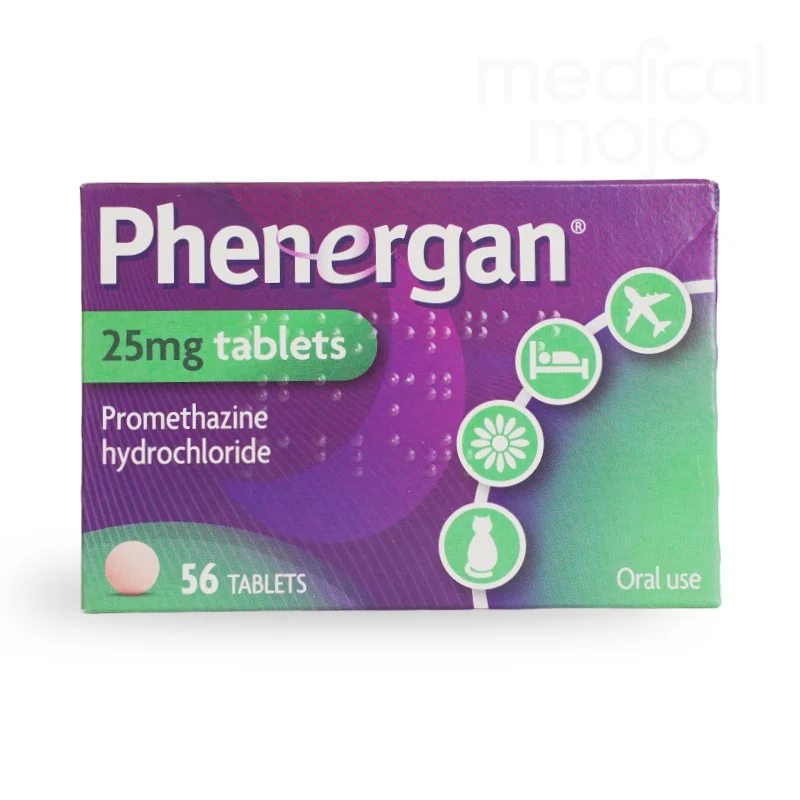
Description
What Are Phenergan 25mg Tablets?
Phenergan 25mg tablets contain promethazine hydrochloride, a first-generation antihistamine with a long history of use in the UK. They are available over the counter and are used to manage a range of conditions — from seasonal allergies and hay fever to short-term sleep disturbance and nausea.[1] If you've been struggling with itchy eyes, a runny nose, or difficulty nodding off, this could be a treatment worth considering. You can browse our full range of allergy and hay fever treatments to find the right option for you.
Each pack contains 56 tablets, making it a practical choice for ongoing symptom management. Promethazine has been used clinically for decades and is listed in the British National Formulary as an antihistamine with sedative properties.[2] It works on multiple receptor types, which explains why it's effective across several different conditions rather than just one.
How Does Phenergan Work in the Body?
Promethazine works by blocking histamine H1 receptors, which are responsible for triggering the classic symptoms of an allergic reaction — sneezing, itching, watery eyes, and skin rashes.[1] But it doesn't stop there. Unlike newer antihistamines, promethazine also crosses the blood-brain barrier, which is why it produces a noticeable sedative effect.[3]
Here's a quick breakdown of how it acts:
- Blocks H1 histamine receptors — reduces allergy symptoms like itching, sneezing, and hives
- Acts on the central nervous system — produces sedation, useful for short-term sleep problems
- Blocks muscarinic receptors — contributes to anti-nausea effects, helpful for travel sickness
- Onset of action — typically within 20–30 minutes of taking a tablet[1]
Who Is Phenergan Suitable For?
Phenergan 25mg tablets are suitable for adults and children aged 5 and over, though dosing differs by age group.[1] They're particularly useful for people who need relief from allergy symptoms alongside a degree of sedation — for example, those whose allergies disrupt their sleep. That said, they're not the right choice for everyone.
Phenergan may be appropriate if you:
- Experience hay fever, hives, or allergic skin reactions
- Suffer from short-term sleep disturbance (adults only for this indication)
- Need relief from nausea or travel sickness
- Are an adult or a child aged 5 years or older
It is not suitable for children under 5, people with certain liver conditions, or those taking monoamine oxidase inhibitors (MAOIs).[4]
How Does Phenergan Compare to Other Antihistamines?
| Feature | Phenergan 25mg (Promethazine) | Cetirizine 10mg (e.g. Zirtek) |
|---|---|---|
| Generation | First-generation | Second-generation |
| Causes drowsiness? | Yes — significant sedation | Minimal in most people |
| Used for sleep? | Yes (short-term) | No |
| Suitable for children under 5? | No | No (under 2 years) |
| Suitable for travel sickness? | Yes | No |
Is Phenergan Safe to Store at Home?
Phenergan 25mg tablets should be stored below 25°C in a dry place, away from direct sunlight. Keep them out of reach of children at all times — the pack contains 56 tablets, which is a significant quantity.[1] Do not use the tablets after the expiry date printed on the packaging.
If you're also looking for help with sleep beyond antihistamines, our sleep aid collection includes a range of options to suit different needs. Always check with a pharmacist if you're unsure whether Phenergan is appropriate alongside any other medicines you take.[5]
This product is a medicine. Speak to your doctor or pharmacist before using if you have an underlying medical condition or are taking other medicines.
What Is Phenergan and What Is It Used For?
Phenergan 25mg tablets contain promethazine hydrochloride, a sedating antihistamine licensed for use in the UK. It is used to treat allergic conditions including hay fever, urticaria (hives), and itchy skin rashes.[1] In adults, it is also used for the short-term management of sleep disturbance. Additionally, it can help relieve nausea and vomiting, including travel sickness.[1] It is available without a prescription from registered UK pharmacies.
What Do You Need to Know Before Using Phenergan?
Before taking Phenergan, it's important to be aware of certain conditions and medicines that may make it unsuitable for you. Do not take Phenergan if any of the following apply:
- You are under 5 years of age[1]
- You are allergic to promethazine or any other ingredient in the tablet
- You have a condition called porphyria (a rare blood disorder)
- You are taking monoamine oxidase inhibitors (MAOIs) or have taken them in the last 14 days[4]
- You have severe liver disease
- You are in the last two weeks of pregnancy
Speak to your doctor or pharmacist before taking Phenergan if you have epilepsy, glaucoma, an enlarged prostate, or any heart condition.[1]
The following medicines may interact with Phenergan:
- Alcohol and other CNS depressants (e.g. sleeping tablets, sedatives)
- Anticholinergic medicines (e.g. some bladder or stomach medicines)
- Antidepressants, including tricyclics and MAOIs[4]
- Antipsychotic medicines
- Some medicines for epilepsy
How Should You Use Phenergan?
Always take Phenergan exactly as directed on the label or as advised by your pharmacist. The tablets should be swallowed whole with water. Here are the general steps to follow:[1]
- Check the correct dose for your age and condition using the table below
- Take the tablet with a full glass of water
- For sleep, take the dose 20–30 minutes before bedtime
- For travel sickness, take the dose the night before travel and again on the morning of travel
- Do not exceed the stated dose
- Do not use for more than 7–10 consecutive nights without medical advice
| Indication | Adults | Children 5–10 years | Children 10+ years |
|---|---|---|---|
| Allergy / Hay Fever | 25mg at night (or 10mg twice daily) | 5–10mg (seek advice) | 10–25mg at night |
| Sleep disturbance | 25mg at bedtime | Not recommended | Not recommended |
| Travel sickness | 25mg the night before | 5–10mg (seek advice) | 10–25mg the night before |
| Nausea / Vomiting | 25mg at night | Seek medical advice | Seek medical advice |
If you're travelling and need additional support for nausea or motion sickness, our sickness and nausea collection has further options to consider alongside your pharmacist's advice.
What Are the Possible Side Effects of Phenergan?
Like all medicines, Phenergan can cause side effects, although not everyone experiences them.[1] If you experience a serious allergic reaction (difficulty breathing, swelling of the face or throat), stop taking the tablets and seek emergency medical help immediately.
Common side effects:
- Drowsiness and sedation — particularly the morning after taking a dose[1]
- Dry mouth
- Blurred vision
- Dizziness
- Difficulty passing urine
Less common side effects:
- Confusion or disorientation, particularly in older adults[3]
- Skin sensitivity to sunlight (photosensitivity)
- Headache
- Restlessness or agitation (more common in children)
- Low blood pressure (hypotension)
How Should You Store Phenergan?
Correct storage helps maintain the effectiveness of your tablets. Follow these guidelines:[1]
- Store below 25°C in a cool, dry place
- Keep away from direct sunlight and moisture
- Keep out of the sight and reach of children
- Do not use after the expiry date printed on the pack
- Do not dispose of medicines via wastewater or household waste — return unused tablets to your pharmacy
For other allergy-related products and treatments, you can explore our allergy and hay fever range for further support.
References
- https://www.nhs.uk/medicines/promethazine/
- https://www.nhs.uk/conditions/antihistamines/
- https://www.nhs.uk/conditions/insomnia/treatment/
- https://www.nhs.uk/conditions/hay-fever/treatment/
- https://bnf.nice.org.uk/drugs/promethazine-hydrochloride/
Written and reviewed by our qualified team
Your safety and success are our highest priorities. Our medical team rigorously evaluates every product and piece of advice we provide, ensuring you receive only the most effective, science-backed solutions available.
Frequently Asked Questions
What are Phenergan 25mg tablets used for?
Phenergan 25mg tablets are used to relieve allergy symptoms such as hay fever, hives, and itchy skin. They are also used for short-term sleep disturbance in adults, and to help manage nausea and vomiting including travel sickness. Because promethazine has sedating properties, it works across all these conditions through slightly different mechanisms in the body. If you're unsure whether Phenergan is right for your symptoms, speak to a pharmacist before purchasing.
How long does Phenergan take to work?
Phenergan typically begins to take effect within 20 to 30 minutes of swallowing a tablet. The sedative effects can last for up to 12 hours, which is why it's usually taken at night when used for sleep disturbance. For allergy symptoms, you may notice relief within an hour of taking your dose. Bear in mind that residual drowsiness the following morning is possible, so plan accordingly if you need to drive or concentrate at work.
Can I take Phenergan every night for sleep?
Phenergan is only recommended for short-term use as a sleep aid — generally no longer than 7 to 10 consecutive nights. Using it regularly beyond this period is not advised without speaking to a doctor, as tolerance can develop and the underlying cause of your sleep problems may need addressing. If you're looking for additional support, our sleep aid collection includes a range of options to discuss with your pharmacist. Persistent insomnia should always be reviewed by a GP.
Is Phenergan safe for children?
Phenergan 25mg tablets are not suitable for children under 5 years of age under any circumstances. For children aged 5 to 10, a lower dose is appropriate but should only be given under the guidance of a healthcare professional. Children aged 10 and over can generally take the same dose as adults for allergy symptoms, but you should always read the patient information leaflet carefully. If you have any doubts, speak to your pharmacist or GP before giving Phenergan to a child.
Can I drink alcohol while taking Phenergan?
No — you should avoid alcohol entirely while taking Phenergan. Alcohol significantly increases the sedative effects of promethazine, which can lead to dangerous levels of drowsiness. This combination can impair your ability to drive, operate machinery, or react quickly in an emergency. Even small amounts of alcohol can intensify the effects, so it's safest to abstain completely during your course of treatment.
Does Phenergan cause drowsiness the next morning?
Yes, this is one of the most commonly reported effects of Phenergan. Because the sedative action can last up to 12 hours, some people feel groggy or slow the morning after taking a tablet. This is particularly relevant if you take a dose late at night or take a higher dose than recommended. You should not drive or operate heavy machinery until you are sure the drowsiness has fully worn off. If morning drowsiness is a problem for you, a non-sedating antihistamine may be a better choice for daytime allergy relief.
What is the difference between Phenergan and non-drowsy antihistamines?
Phenergan contains promethazine, a first-generation antihistamine that crosses the blood-brain barrier and causes noticeable sedation. Non-drowsy antihistamines such as cetirizine or loratadine are second-generation medicines that are far less likely to cause sleepiness. Phenergan is better suited for situations where sedation is acceptable — such as night-time allergy relief or short-term sleep problems — whereas non-drowsy options are preferable for daytime use. You can explore a wider range of options in our allergy and hay fever collection.
Can I take Phenergan if I am pregnant or breastfeeding?
You should speak to your doctor or midwife before taking Phenergan if you are pregnant or breastfeeding. Promethazine is generally avoided in the last two weeks of pregnancy due to potential effects on the newborn. Small amounts of promethazine may pass into breast milk, so breastfeeding is not recommended while taking this medicine. Your healthcare provider can advise on the safest alternative for managing allergy symptoms or nausea during pregnancy.